.jpg)
Hybrid events give you the best of both worlds: an in-person event experience for the audience in the room, combined with a virtual experience for people joining remotely. But how much does a hybrid event actually cost?
The short answer is: it depends.
A hybrid event can be as simple as adding a livestream to an existing event, or as comprehensive as creating a fully produced virtual experience with multiple cameras, dedicated presenters, audience interaction, a custom event platform and a production team managing both audiences simultaneously.
The good news is that you don't necessarily need to double your event budget to go hybrid. With the right technology and production approach, you can build a hybrid event around your existing venue, staging and AV requirements.
For a typical corporate hybrid event, the technology and production component can range from a few thousand dollars for a relatively straightforward livestream through to tens of thousands of dollars for a more complex multi-camera production with a virtual event platform and dedicated technical team.
The biggest factor is what you want the remote audience to experience.
If your goal is simply to allow people who cannot attend in person to watch the main stage, your requirements may be relatively straightforward. If you want remote attendees to feel like active participants, interact with speakers, ask questions, network, move between sessions and access content on demand, the production becomes more sophisticated.
Rather than thinking about hybrid as one additional line item, it is useful to break the cost into a few key areas.
.jpg)
A professional hybrid event usually requires more than simply pointing a webcam at the stage.
Depending on the event, you might need multiple cameras covering presenters, the stage, audience reactions and other areas of the room. A vision mixer can then switch between these sources to create a polished broadcast for the virtual audience.
For smaller events, a simple camera and streaming setup may be enough. Larger conferences, launches and corporate events may require multiple broadcast cameras, operators, vision mixing and dedicated video production.
The important consideration is that the virtual audience should be watching a produced event, rather than simply watching a room through a single static camera.
Your event also needs a reliable way to get the content from the venue to your online audience.
This can involve dedicated internet connectivity, streaming hardware, encoding equipment and monitoring. For larger events, having backup connectivity or streaming pathways can also form part of the production plan.
This is one area where cutting costs can create unnecessary risk. If hundreds or thousands of people are relying on the online experience, a stable connection and properly tested streaming setup are critical.
Your physical event still needs to work for the people attending in person.
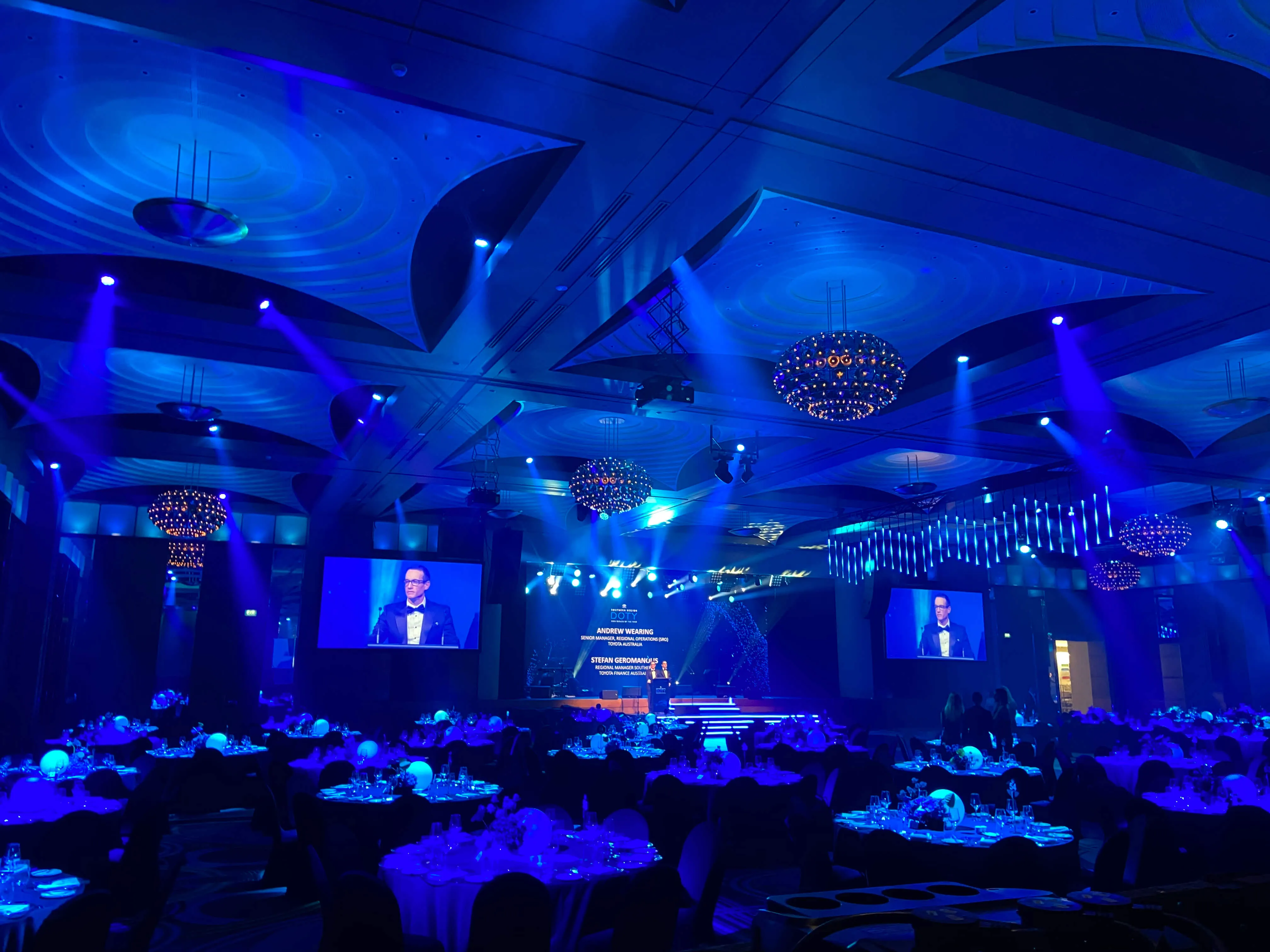
That could include LED screens, projection, presentation screens, confidence monitors, staging, microphones, lighting and playback systems. Depending on the event design, the same content can often be integrated across the physical and virtual experiences.
At Connected Event Group, we work across the full AV production, which means the in-room technology and virtual production can be planned together rather than treated as two separate events.
This can also open up opportunities to make your event more visually engaging for the online audience, using LED backdrops, branded graphics, speaker layouts and other production elements that translate well to camera.
.jpg)
Not every hybrid event needs a dedicated virtual event platform.
If attendees simply need to watch the event, a livestream may be all you need. If you want registrations, session access, audience interaction, networking, sponsor branding, resources and other functionality, a more comprehensive event platform may be worthwhile.
This is where your event objectives should guide the technology.
There is little value in paying for a complex platform full of features your audience will never use. Equally, using a basic livestream when your virtual attendees need to actively participate can create a frustrating experience.
One of the costs that is often overlooked when planning a hybrid event is the people behind the technology.
Hybrid events require someone to manage the technical production, and depending on the scale of the event this could include camera operators, vision operators, streaming technicians, audio technicians, presentation technicians, producers and a show caller.
You are effectively producing an event for two audiences at the same time.
The onsite audience needs to hear and see everything clearly, while the online audience needs a seamless broadcast. Speakers need presentations, microphones and confidence monitors, while the virtual audience may need graphics, speaker feeds, holding slides and audience interaction.
Having an experienced technical team coordinating these elements can make a significant difference to the overall experience.
Hybrid events also introduce additional considerations around presentations and speakers.
Presenters may be onsite, remote or a combination of both. Presentations need to be collected and tested. Remote speakers need to be checked before going live. Graphics and videos need to work across the broadcast. Someone needs to know what happens if a presentation changes five minutes before the session.
These are production details, but they can have a big impact on the experience.
Building presentation management and technical rehearsals into your hybrid event budget can help prevent last-minute issues on event day.
As a rough guide, you might think about hybrid production in three broad levels:
Simple hybrid livestream: Suitable for smaller meetings, presentations and events where the online audience primarily needs to watch. This might involve one or two cameras, basic streaming, audio integration and a technician.
Produced hybrid event: Suitable for conferences, corporate events and launches where the virtual audience needs a more polished experience. This could include multiple cameras, vision mixing, graphics, dedicated streaming, presentation management and a larger technical crew.
Full hybrid production: Suitable for larger conferences and events where the virtual audience is effectively another audience at the event. This could include multi-camera production, virtual platforms, audience interaction, remote speakers, dedicated producers, additional content creation and a larger onsite crew.
The actual cost will depend on your event size, venue, duration, audience numbers, production quality and the experience you want to create.
.jpg)
Absolutely.
One of the best ways to control the cost is to decide what the virtual audience actually needs before selecting the technology.
For example, you may already be hiring LED screens, microphones, cameras and technicians for the physical event. Rather than treating the hybrid component as an entirely separate production, an experienced AV partner can look at how those resources can be integrated.
It is also worth considering whether every session needs to be streamed live. Some breakout sessions may work better as recordings or on-demand content, while the main plenary sessions receive the full live production treatment.
Good hybrid event planning is not about adding as much technology as possible. It is about choosing the right technology for the experience you are trying to create.
That depends on your objectives.
A hybrid event can allow people to participate when travel, location, accessibility or capacity prevents them from attending in person. It can also extend the reach of your content beyond the physical room and provide opportunities to deliver additional value to sponsors and partners.
For some events, the additional reach and flexibility can justify the investment. For others, a traditional in-person event or a standalone virtual event may make more sense.
The important thing is to work out what you want the hybrid element to achieve before you start building the technical solution.
At Connected Event Group, we help businesses bring together the technology, production and people required to deliver hybrid events.
From LED screens, staging, cameras and audio through to livestreaming, virtual event technology and onsite technical production, we can help you build a solution around your event rather than forcing your event to fit a technology package.
Whether you are planning a small corporate presentation, a conference with hundreds of attendees or a major event with audiences both onsite and online, our team can help you work out what you actually need and where your budget will have the greatest impact.
Planning a hybrid event? Talk to the Connected Event Group team about your event requirements and we can help you build a hybrid production plan that works for both your in-person and virtual audiences.